Course Content
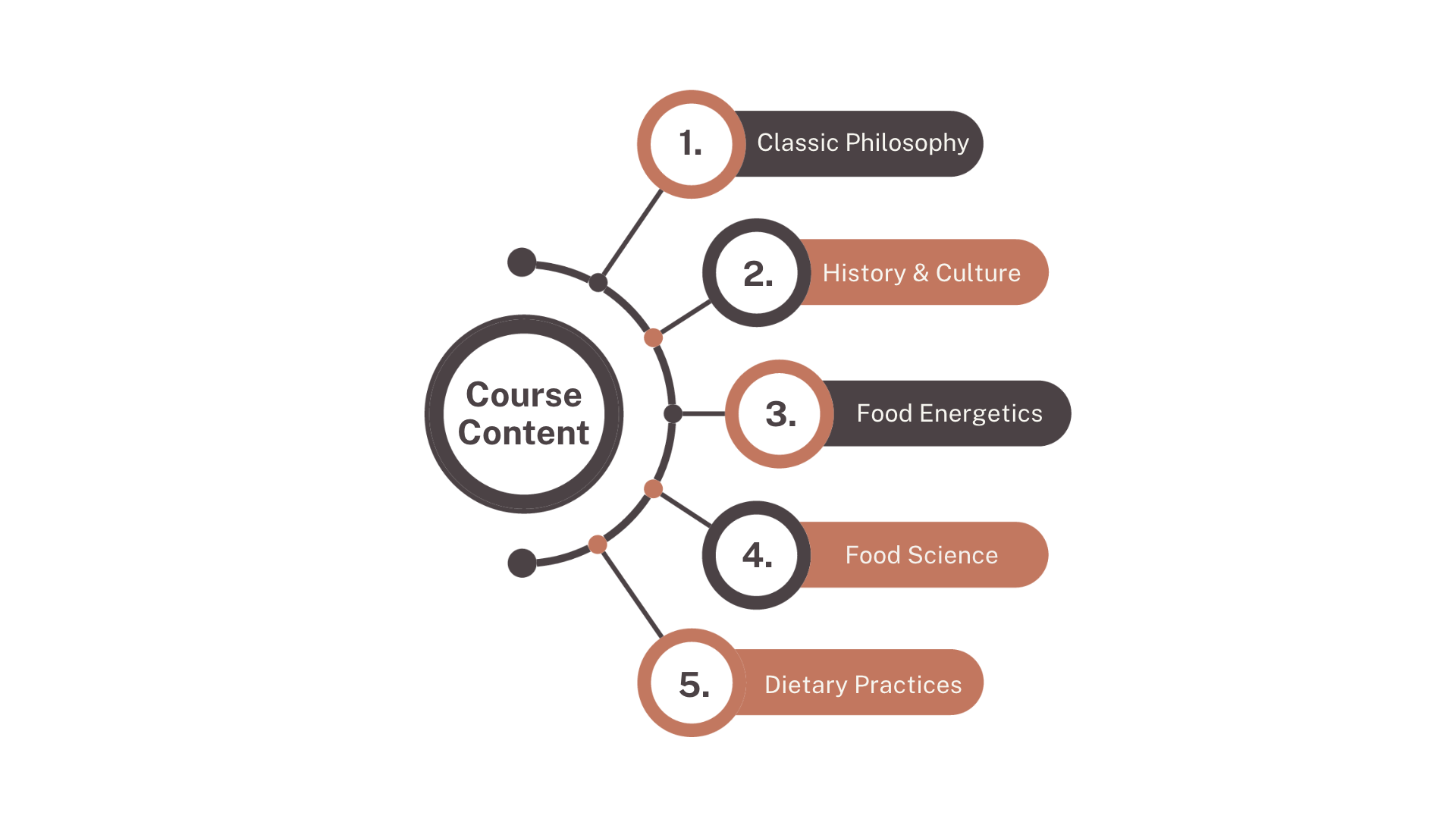
This course explores:
Classical Philosophy: Explore the philosophical foundations of Chinese Medicine, including Yin and Yang, the Five Phases, Daoist principles and the relationship between humanity and nature.
History & Culture: Trace the historical development of Shi Liao, from early Chinese medical and philosophical writings through to the development of dietary therapy as an established part of Chinese medical practice.
Food Energetics: Develop an understanding of the inherent nature of food, including temperature, flavour, movement and its relationship with the body's physiology and energetic functions.
Food Science: Explore the nutritional composition of food and contemporary nutritional research, considering how modern scientific understanding can sit alongside the principles of Classical Chinese Medicine.
Dietary Practices: Study the practical application of Chinese Dietary Therapy, including food preparation, cooking methods, seasonal eating, constitutional considerations and the relationship between diet and health.
Throughout the course, we bring these areas of study together to develop a more integrated understanding of food, medicine and the nourishment of life.
This course has been developed through years of study, with the classical Chinese medical texts and teachings at its foundation.
Chinese Medicine cannot be fully understood in isolation from the philosophy, history and culture from which it emerged. Its principles are rooted in an understanding of the natural world and the relationship between Heaven, Earth and humanity.
For this reason, the course looks beyond the practical application of dietary recommendations to explore the medical theory, philosophical principles and historical teachings that give Chinese Dietary Therapy its depth and meaning.
This is not simply a course about what to eat. It is a study of the relationship between food, nature and the cultivation of life through the principles of Classical Chinese Medicine.
Change the way you view food…
Provisional course outline
-
Day 1
Historical understanding of Shi Liao
Food as medicine
Food energetics
Taste/Flavour
Day 2
Constitutional typing
The Lifeforce of Food
Food alchemy & cooking
Longevity and preventative nutrition
-
Day 1
Principles of Spring living
Vegetables - shoots and sprouts, legumes
Citrus fruits and condiments
Vital Substance - Blood
Day 2
Flow vs Stagnation (Liver & Gallbladder)
Environmental toxins
Detoxification and purging
Eating psychology
-
Day 1
Principles of Summer living
Vegetables - Fruiting veg & flowers
Berries, superfoods & beverages
Vital substance - Shen
Day 2
Expression vs Agitation (Heart, Small Intestine, Pericardium and Sanjiao)
Circulatory disorders
Heat and Fire conditions
Raw food, juicing, vegetarian, vegan and mediterranean diets
-
Day 1
Principles of Late Summer Living
Vegetables - Roots & rhizome
Grains & fungi
Vital Substances = Qi
Day 2
Transformation and accumulation (Stomach & Spleen)
Digestive health & disorder
Weight management
Fasting & carb cycling
-
Day 1
Principles of Autumn living
Vegetables - Bulbs & Nuts
Culinary herbs & spices
Vital Substance - Body fluids (Jin Ye)
Day 2
Retention vs resistance (Lung and Large intestine)
Immune health and disorder
Pathogens (food and non-food)
Fermentation
-
Day 1
Principles of Winter living
Meat & Seafood
Seeds & Dairy
Vital Substance - Jing
Day 2
Conservation vs depletion (Kidney & Bladder)
Life cycles
Keto, paleo and hunter gatherer diets
Closing Tea Ceremony
Course Format
The course is delivered over six in-person weekends, comprising twelve days of teaching throughout 2027.
Each day is divided into four 90-minute teaching sessions, allowing us to explore the subject in depth while maintaining time for discussion, questions and the exchange of ideas.
Between weekends, four online tutorials provide an opportunity to revisit topics, discuss questions arising from the teaching and continue developing your understanding.
The programme includes:
Six in-person weekends (12 teaching days).
Four 90-minute teaching sessions each day.
72 hours of in-person teaching.
Four additional one-hour online tutorials.
A small learning group to encourage discussion and meaningful engagement.
The programme has been arranged to follow the changing seasons, allowing us to explore the Five Phases and their relationship with food, the environment and the natural cycles of the year.